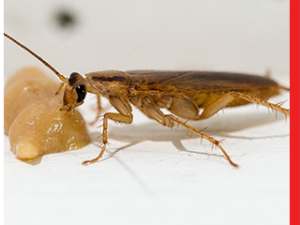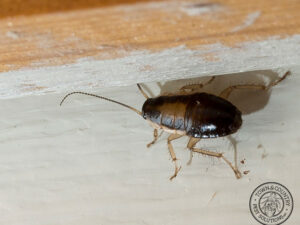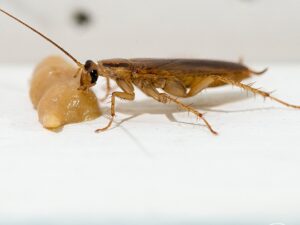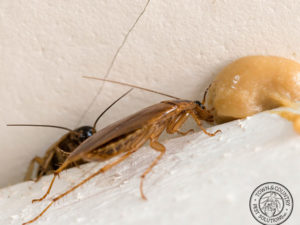
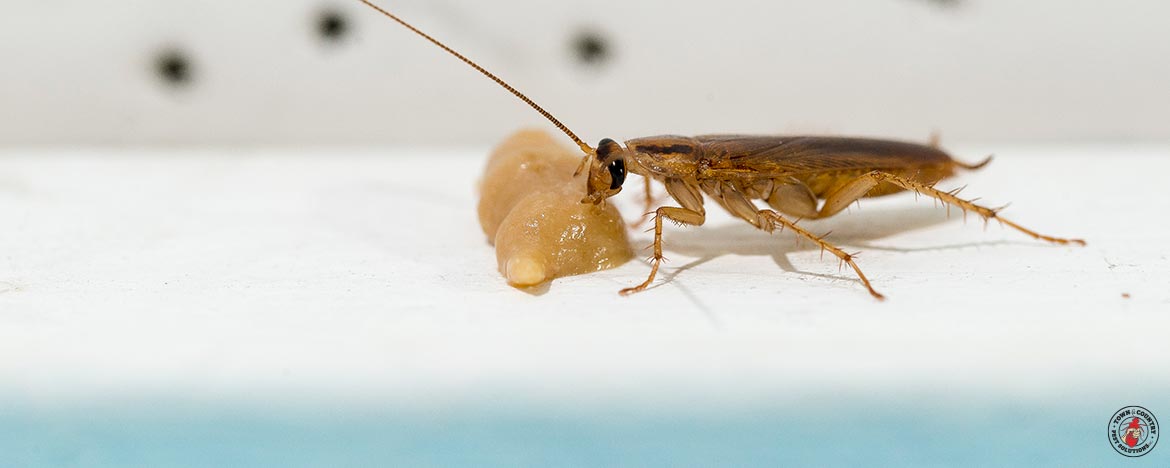
Cockroaches carry over 30 types of bacteria, trigger asthma attacks through shed skin and droppings, and contaminate food surfaces with pathogens like Salmonella and E. coli. Controlling a cockroach infestation is a public health decision—one that directly affects the respiratory and digestive health of everyone in your household.
You spot one cockroach scuttling across your kitchen floor at night. You tell yourself it’s just one. But where there’s one, there are almost certainly hundreds more hiding inside your walls, beneath your appliances, and inside your cabinets. The real problem isn’t the sight of them—it’s what they leave behind.
Cockroaches are among the most medically significant household pests in the world. They don’t sting or bite (at least not often). Their danger is quieter and more insidious: contaminated surfaces, airborne allergens, and pathogens that travel from the sewers into your kitchen without you ever noticing. Most people treat a cockroach problem as a nuisance to be dealt with eventually. The science suggests it deserves far more urgency than that.
This post breaks down exactly what cockroaches do to your health—from the bacteria they spread, to the asthma attacks they trigger, to the food contamination risks hiding on your countertops. By the end, you’ll understand why roach control is a health decision first.
How Do Cockroaches Spread Bacteria in the Home?
Cockroaches are mechanical vectors, meaning they physically transport pathogens from one surface to another without becoming sick themselves. A single cockroach can travel through raw sewage, a garbage bin, and your kitchen counter within the same night.
According to the World Health Organization (WHO), cockroaches are known or suspected carriers of the microorganisms that cause the following diseases:
|
Disease |
Pathogen |
Transmission Route |
|---|---|---|
|
Salmonellosis |
Salmonella spp. |
Contaminated food/surfaces |
|
Typhoid Fever |
Salmonella typhi |
Contaminated water/food |
|
Dysentery |
Shigella spp. |
Fecal contamination |
|
Cholera |
Vibrio cholerae |
Contaminated water/food |
|
Gastroenteritis |
E. coli |
Food surface contact |
|
Listeriosis |
Listeria monocytogenes |
Food contamination |
The bacteria hitch rides on the cockroach’s legs and body, transferring onto any surface the insect walks across. Cutting boards, utensils, open food containers, and even dish racks are all fair targets.
Why Cockroaches Are So Effective at Spreading Pathogens
Their biology makes them uniquely efficient contaminators. Cockroaches feed on almost anything organic—feces, food scraps, dead skin cells, rotting material—then walk directly onto food preparation surfaces. Their leg spines trap bacteria, and their saliva, vomit, and droppings deposit further contamination wherever they rest.
A study published in the International Journal of Environmental Research and Public Health found that cockroaches collected from urban residential areas tested positive for multiple antibiotic-resistant bacteria, including methicillin-resistant Staphylococcus aureus (MRSA). This isn’t a developing-world concern. It applies equally to modern, urban homes with cockroach activity.
Can Cockroaches Trigger Asthma and Respiratory Problems?
Yes—and this is arguably the most underappreciated health risk cockroaches pose. Cockroach allergens are a documented trigger for asthma attacks, particularly in children.
Cockroach body parts, shed skins (called exuviae), saliva, and droppings all contain proteins that act as allergens in sensitive individuals. When these particles dry out, they become airborne and are inhaled.
What Does the Research Say About Cockroach Allergens and Asthma?
The evidence is significant. According to the Asthma and Allergy Foundation of America (AAFA):
- Cockroach allergens affect between 78% and 98% of urban homes.
- Exposure to cockroach allergens is one of the leading causes of childhood asthma hospitalizations in the United States.
- Children with cockroach allergies who are exposed to high allergen levels are hospitalized for asthma at rates significantly higher than children without this sensitivity.
The National Institute of Environmental Health Sciences (NIEHS) has also identified cockroach allergens as a major trigger for year-round (perennial) asthma, distinct from seasonal pollen-related asthma.
|
Allergen Source |
How It Becomes Airborne |
Who Is Most at Risk |
|---|---|---|
|
Cockroach droppings |
Dry and fragment into fine particles |
Children, elderly, people with asthma |
|
Shed exoskeletons |
Disintegrate over time |
Anyone in infested spaces |
|
Saliva residue |
Deposits on surfaces, dries and disperses |
Allergy-sensitive individuals |
|
Dead cockroach particles |
Break down into dust over time |
Households with heavy infestations |
What Symptoms Do Cockroach Allergens Cause?
Beyond asthma attacks, cockroach allergen exposure can cause:
- Chronic coughing and wheezing
- Nasal congestion and runny nose
- Skin rashes and eczema
- Eye irritation and redness
- Shortness of breath, especially at night
These symptoms are frequently misdiagnosed as seasonal allergies or general respiratory illness. If symptoms worsen indoors—particularly at night when cockroaches are most active—a cockroach allergen problem may be the cause.
How Do Cockroaches Contaminate Food and Kitchen Surfaces?
Food contamination occurs in two ways: direct contact and indirect deposit. Direct contact happens when a cockroach walks across or feeds on stored food. Indirect contamination occurs through droppings, vomit, and shed body parts left on surfaces that later come into contact with food.
Where in the Kitchen Are Cockroaches Most Likely to Contaminate?
Cockroaches gravitate toward warm, dark, moist areas close to food sources. The highest-risk zones in a typical kitchen include:
|
Location |
Why It’s High Risk |
|---|---|
|
Behind and under the refrigerator |
Warm motor, food crumbs, moisture |
|
Inside cabinet hinges and cracks |
Dark, enclosed, near pantry items |
|
Under the stove and oven |
Heat, grease residue, food particles |
|
Beneath the kitchen sink |
Moisture from plumbing, organic debris |
|
Inside pantry shelves |
Direct food access, cardboard packaging |
Cardboard packaging is a particular concern. Cockroaches consume and nest inside cardboard, meaning grocery items brought home in cardboard boxes can introduce cockroaches—and their eggs—directly into your pantry.
Can You See the Contamination?
Rarely. Cockroach droppings from smaller species resemble black pepper or coffee grounds. Larger species leave dark, cylindrical droppings roughly 2mm in length. Egg casings (oothecae) are brown and oval-shaped, about the size of a small bean. Most contamination is invisible to the naked eye—bacteria left on surfaces, allergen particles already airborne, pathogens already transferred to food.
This is precisely why a “clean-looking” kitchen can still harbor significant cockroach-related health risks.
Who Is Most Vulnerable to Cockroach-Related Health Problems?
While cockroach infestations pose risks to everyone, certain groups face disproportionately severe consequences:
- Children: Their developing immune systems are more reactive to allergens, and they spend more time on floors where cockroach debris settles.
- People with asthma or existing respiratory conditions: Cockroach allergen exposure can escalate mild asthma into a serious, hospitalization-level event.
- The elderly: Compromised immune function increases susceptibility to bacterial infections from contaminated food.
- Immunocompromised individuals: Those undergoing chemotherapy, living with HIV, or taking immunosuppressants face elevated risk from cockroach-borne bacteria.
- Pregnant women: Certain bacterial infections, such as listeriosis caused by Listeria monocytogenes, carry serious risks for fetal health.
What Are the Most Effective Ways to Control Cockroaches for Health Protection?
Eliminating cockroaches requires a combination of sanitation, exclusion, and treatment. Pest control professionals refer to this as Integrated Pest Management (IPM).
Sanitation
- Store all food in sealed, airtight containers—not in cardboard packaging.
- Empty trash bins daily and use bins with sealed lids.
- Clean under appliances regularly to remove grease and food debris.
- Fix leaking pipes promptly; cockroaches need water to survive.
Exclusion
- Seal cracks and gaps around pipes, baseboards, and behind appliances with caulk.
- Replace worn door sweeps and window seals.
- Inspect grocery bags and secondhand furniture before bringing them inside.
Treatment
- Gel baits placed in cracks and crevices are highly effective and low in toxicity to humans.
- Boric acid, applied correctly in wall voids and cabinet interiors, provides long-lasting control.
- Professional pest management services are recommended for moderate-to-severe infestations, particularly in homes with children or immunocompromised residents.
Addressing an infestation quickly reduces allergen accumulation and cuts off the bacterial transmission cycle before it causes measurable health harm.
Cockroaches Are a Health Hazard—Here’s What to Do Next
A cockroach infestation is not a housekeeping failure. It’s a public health concern with documented links to bacterial infection, respiratory disease, and food-borne illness. The pathogens they carry don’t distinguish between clean homes and dirty ones. Neither do the allergens.
If you’ve seen signs of cockroach activity—droppings, shed skins, egg casings, or live insects—the appropriate response is prompt, systematic action. Start with sanitation and exclusion measures immediately. For persistent or large infestations, consult a licensed pest control professional who can assess the scope of the problem and apply targeted treatments.
Your household’s health is worth more than a wait-and-see approach.
Frequently Asked Questions About Cockroaches and Health Risks
Can cockroaches make you sick even if you don’t touch them?
Yes. Cockroaches contaminate surfaces and food indirectly through their droppings, shed skins, and saliva. Their dried debris also becomes airborne, meaning inhaling cockroach allergens can trigger asthma or allergic reactions without any direct contact with the insect itself.
How quickly can a cockroach infestation affect indoor air quality?
An established infestation can degrade indoor air quality within weeks. As cockroach populations grow, the volume of shed skin particles, droppings, and decomposing body parts increases, raising airborne allergen levels throughout the home—particularly in enclosed spaces with limited ventilation.
Are cockroach allergies common, and how are they diagnosed?
Cockroach allergies are more common than most people realize. The Asthma and Allergy Foundation of America estimates cockroach allergens are present in the vast majority of urban homes. Diagnosis typically involves a skin-prick test or specific IgE blood test ordered by an allergist.
What diseases have been directly linked to cockroach infestations?
Cockroaches are associated with salmonellosis, typhoid fever, dysentery, cholera, gastroenteritis caused by E. coli, and listeriosis. The WHO classifies cockroaches as known or suspected carriers of the pathogens responsible for each of these conditions.
Is it safe to stay in a home with a cockroach infestation?
The risk level depends on the severity of the infestation and the health status of the residents. For individuals with asthma, allergies, or compromised immune systems, even a moderate infestation poses meaningful health risks. Taking immediate action to eliminate the infestation—rather than tolerating it—is the medically sound choice.
Can professional pest control fully eliminate cockroach health risks?
Professional pest control can eliminate an active infestation and significantly reduce ongoing risk. However, allergen particles from prior infestations can persist in dust and soft surfaces. A thorough cleaning—including vacuuming with a HEPA filter and washing soft furnishings—should accompany any pest control treatment to reduce residual allergen exposure.