
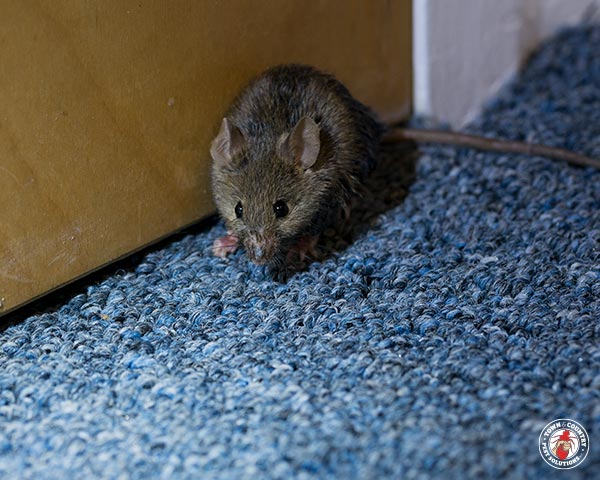
Quick answer: Mice squeeze through gaps as small as a dime (about ¼ inch) by flattening their flexible rib cages. Common entry points include gaps around utility pipes, vents, garage doors, and foundation cracks. Sealing these openings with steel wool, caulk, or hardware cloth is the most effective way to keep mice out for good.
Finding mouse droppings in your pantry or hearing scratching in the walls at night is unsettling enough without wondering how the mice got inside in the first place. Unlike larger pests, mice don’t need a wide-open door. A gap the width of a pencil is often all they need.
Understanding exactly where and how mice enter your home is the first step toward keeping them out. This guide walks through the most common entry points, explains why mice are so good at finding them, and offers rodent-proofing methods that actually hold up over time.
Why Can Mice Fit Through Such Small Gaps?
A house mouse (Mus musculus) has a collapsible rib cage and flexible skeleton, allowing it to compress its body to fit through openings as small as 6 to 7 millimeters wide—roughly the diameter of a standard pencil. If a mouse can fit its skull through a gap, the rest of its body typically follows.
This is why sealing “obvious” entry points often isn’t enough. Mice don’t need a hole; they need a crack, a gap, or a loose seal, and most homes have more of these than homeowners realize.
What Are the Most Common Ways Mice Get Into a House?
Mice are opportunistic and will exploit almost any gap connecting the outdoors to a warm, food-rich interior. The table below outlines the most frequent entry points pest control professionals identify during inspections.
|
Entry Point |
Why It’s Vulnerable |
Typical Gap Size |
|---|---|---|
|
Utility pipe and wire penetrations |
Builders often leave gaps around the pipe or wire after installation |
¼ inch or more |
|
Dryer vents and exhaust fans |
Flaps can warp, rust, or stick open |
½ inch or more |
|
Foundation cracks |
Settling and weather cause concrete to crack over time |
Varies, often ¼ inch+ |
|
Garage door seals |
Rubber seals wear down and lift at the corners |
¼ inch or more |
|
Attic and roof vents |
Missing or damaged screens leave vents exposed |
½ inch or more |
|
Door thresholds and weatherstripping |
Gaps form as doors settle or weatherstripping degrades |
¼ inch or more |
|
Window frames and screens |
Cracked frames or torn screens create openings |
Varies |
|
Chimneys without caps |
An uncapped chimney is effectively an open door |
Several inches |
Gaps Around Utility Lines and Pipes
Anywhere a pipe, cable, or vent passes through an exterior wall is a potential entry point. These penetrations are frequently sealed only with foam, which mice can chew through, or left unsealed entirely.
Foundation Cracks and Gaps
Concrete foundations naturally develop hairline cracks as a house settles. Over several years, these cracks can widen enough for mice to pass through, especially near the base of the foundation where soil moisture accelerates deterioration.
Garage Doors and Thresholds
Garage door seals are one of the most overlooked entry points. The rubber gasket along the bottom of a garage door compresses and cracks with age, and gaps commonly form at the corners where the seal meets the track.
Attic, Soffit, and Roof Vents
Mice are skilled climbers and can access rooflines via trees, downspouts, or utility lines. Once there, damaged vent screens or gaps in soffits provide direct access to the attic.
When Are Mice Most Likely to Try to Get Inside?
Mice actively seek shelter as outdoor temperatures drop, which is why rodent complaints typically spike in fall and early winter. Choose to prioritize rodent-proofing before the first cold snap if your home is in a region with distinct seasons, since this is when mice are most motivated to find an indoor food and heat source.
How Do You Rodent-Proof a House Against Mice?
Effective exclusion work combines inspection, sealing, and ongoing maintenance. The materials you use matter as much as where you use them, since mice can chew through many common sealants.
|
Material |
Mouse-Resistant? |
Best Used For |
|---|---|---|
|
Steel wool + caulk |
Yes |
Small gaps around pipes and wires |
|
Hardware cloth (1/4-inch mesh) |
Yes |
Vents, larger foundation gaps |
|
Copper mesh |
Yes |
Pipe penetrations, flexible gaps |
|
Expanding foam (alone) |
No |
Not recommended without a mesh barrier |
|
Caulk (alone, on small cracks) |
Yes |
Hairline cracks under ¼ inch |
|
Door sweeps |
Yes |
Garage doors, exterior doors |
Step 1: Inspect the Exterior Methodically
Walk the full perimeter of the house, checking at ground level and up toward the roofline. Use a flashlight to check dark corners, and test a pencil against any suspicious gap. If the pencil fits, a mouse likely can too.
Step 2: Seal Small Gaps With Steel Wool and Caulk
Choose steel wool packed tightly into a gap, then seal over it with caulk, if the opening is small and irregular, such as around a pipe. Mice generally won’t chew through steel wool, and the caulk holds it in place while sealing out moisture and air.
Step 3: Cover Larger Openings With Hardware Cloth
Choose ¼-inch hardware cloth if the gap is larger than a half-inch, such as a vent cover or a wide foundation gap. Secure it with screws or heavy-duty staples rather than adhesive alone, since mice can pry loose material away from an edge.
Step 4: Install or Replace Door Sweeps
Add a door sweep to any exterior door, including the garage, where daylight is visible underneath. A properly fitted sweep closes the gap completely rather than compressing partway.
Step 5: Trim Vegetation and Manage Clutter
Keep shrubs, woodpiles, and debris at least 18 inches from the foundation. Overgrown vegetation gives mice cover to approach the house undetected and often hides entry points from view.
Step 6: Recheck Seasonally
Inspect all sealed entry points at least twice a year, since caulk shrinks, foam degrades, and new gaps can form after storms or settling.
What Should You Do if Mice Are Already Inside?
Sealing entry points stops new mice from getting in but won’t remove mice already inside. Combine exclusion work with trapping, and consider professional pest control if droppings, gnaw marks, or noises persist after a week of trapping, since an active infestation can involve more mice than initial signs suggest.
Keep Mice Out for Good
Mice don’t need much of an opening to turn your house into theirs. The good news is that most entry points are fixable with inexpensive materials and a few hours of focused work. Start with a full exterior inspection, prioritize the gaps near utility lines and the garage, and recheck your seals each season.
If your inspection turns up signs of an existing infestation rather than just entry points, pair your sealing work with trapping or a professional rodent control service to fully resolve the problem.
Frequently Asked Questions
How small of a gap can a mouse fit through?
A mouse can fit through a gap as small as ¼ inch, roughly the width of a dime or a standard pencil, due to its flexible, collapsible rib cage.
What time of year do mice most often enter houses?
Mice most commonly enter homes in fall and early winter as outdoor temperatures drop and they seek warm shelter and reliable food sources.
Is expanding foam enough to seal mouse entry points?
No. Expanding foam alone is not effective because mice can chew through it. Pair foam with steel wool or hardware cloth for a durable, mouse-resistant seal.
How much does professional rodent-proofing typically involve?
Professional exclusion services typically include a full inspection, sealing of all identified entry points with mouse-resistant materials, and a follow-up visit to confirm the seals are holding.
Can mice come back after entry points are sealed?
Yes, if new gaps form or existing seals degrade. Recheck sealed areas at least twice a year, especially after extreme weather or home settling.