Bed bugs are small, parasitic insects that feed exclusively on blood, hide in cracks and seams near sleeping areas, and reproduce rapidly—a single female can lay up to 500 eggs in her lifetime. Understanding their biology is the first step to stopping an infestation before it spirals out of control.
You wake up with itchy, red welts on your arms. You strip the sheets. You check the mattress. Then—there it is. A small, rust-colored speck that moves. Bed bugs are notoriously difficult to find, and even harder to eliminate. But most people don’t realize just how sophisticated these tiny insects are.
Bed bugs have survived for thousands of years by evolving alongside their hosts. They’re stealthy feeders, expert hiders, and surprisingly fast reproducers. The more you understand about how bed bugs live and behave, the better equipped you’ll be to detect, prevent, and eliminate them.
This guide breaks down the biology of bed bugs from the ground up—covering how they feed, where they hide, how fast they multiply, and what science tells us about their survival strategies.
What Are Bed Bugs, Exactly?
Bed bugs (Cimex lectularius) are small, wingless, parasitic insects belonging to the family Cimicidae. They are obligate hematophages, meaning blood is the only food source they require to survive and reproduce.
The common bed bug (Cimex lectularius) is the species most frequently encountered in homes, hotels, and public transport in temperate climates. A tropical cousin, Cimex hemipterus, is more prevalent in warmer regions but shares nearly identical behaviors.
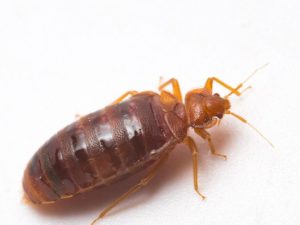
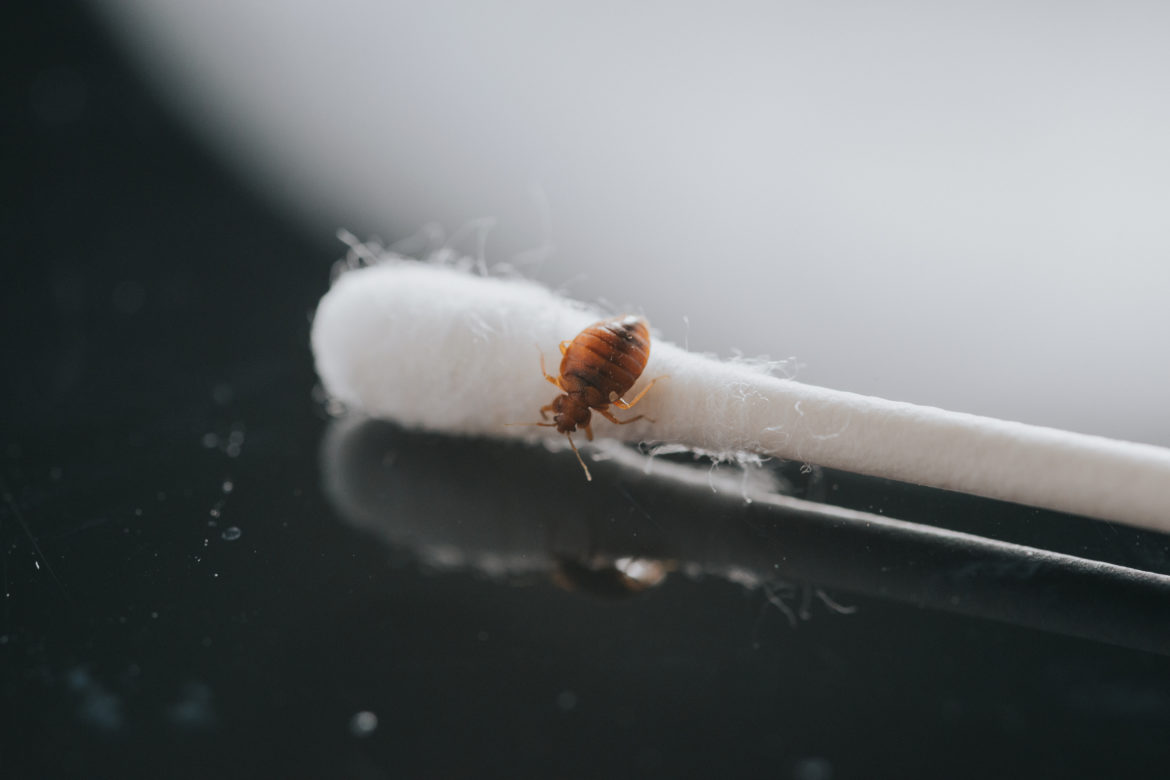
Adult bed bugs measure approximately 4–5 mm in length—roughly the size of an apple seed—and are flat and oval-shaped when unfed. After a blood meal, their bodies swell and turn a deeper reddish-brown. This flattened body shape is one of their most critical survival traits: it allows them to squeeze into gaps as thin as a credit card.
How Do Bed Bugs Feed on Humans?
What happens during a bed bug bite?
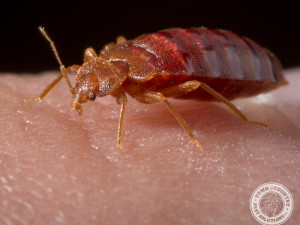
Bed bugs are nocturnal feeders. They typically emerge between 2:00 and 5:00 AM, when hosts are in their deepest sleep. A bed bug feeds by piercing the skin with two hollow tubes: one injects saliva containing anticoagulants and mild anesthetics, and the other draws blood.
The anesthetic component is why most people don’t feel the bite in the moment. By the time the itching begins—sometimes 24 to 48 hours later—the bed bug has long since retreated.
A single feeding session lasts between 3 and 12 minutes, during which a bed bug can consume up to three times its body weight in blood. Once engorged, it withdraws and returns to its hiding spot to digest.
How often do bed bugs need to feed?
Bed bugs do not feed every night. Adult bed bugs typically feed once every 5 to 10 days under normal conditions. Remarkably, they can survive for months without any food at all. According to research published by Rutgers University, bed bugs kept at room temperature survived without feeding for over 70 days. In cooler temperatures, survival can extend significantly longer—potentially up to a year.
This extended survival capability is a key reason why simply vacating a room for a few weeks does not eliminate an infestation.
Do bed bugs feed on anything other than humans?
While Cimex lectularius strongly prefers human blood, bed bugs will feed on other warm-blooded animals—including cats, dogs, and birds—when human hosts are unavailable. However, they cannot complete their full reproductive cycle on non-human hosts alone, which means pets are secondary targets, not primary ones.
Where Do Bed Bugs Hide During the Day?
What are the most common bed bug hiding spots?
Bed bugs are photophobic—they avoid light and activity. During daylight hours, they retreat into tight, dark spaces close to their feeding source. The most common hiding locations include:
|
Location |
Why Bed Bugs Choose It |
|---|---|
|
Mattress seams and box springs |
Close to sleeping host, dark, and undisturbed |
|
Bed frame joints and screw holes |
Tight gaps provide shelter and aggregation |
|
Headboard crevices |
Proximity to host’s head during sleep |
|
Baseboards and wall gaps |
Long-term harborage sites |
|
Electrical outlets |
Dark, rarely disturbed, and thermally stable |
|
Upholstered furniture |
Sofa seams and cushion folds mimic mattress conditions |
|
Luggage and clothing |
Critical for hitchhiking and spreading to new locations |
The term “hitchhiker” is often used to describe bed bugs because of their ability to travel undetected in luggage, used furniture, clothing, and even library books. Unlike fleas or lice, bed bugs do not live on their host—they travel with them by hiding in belongings.
How far from a host will bed bugs typically hide?
Research from the University of Minnesota found that bed bugs prefer to hide within 1–8 feet of their host’s sleeping area. However, in heavily infested environments, they will spread further—into neighboring rooms, through shared walls, and into electrical conduits.
How Do Bed Bugs Reproduce?
What is the bed bug reproductive cycle?
Bed bugs reproduce through a process called traumatic insemination. The male pierces the female’s abdomen with a specialized reproductive organ and deposits sperm directly into her body cavity. This unusual process—while effective—causes physical trauma to the female.
After mating, a female bed bug requires at least one blood meal before she can lay eggs. She lays between 1 and 7 eggs per day, and up to 500 eggs over her lifetime. Each egg is about 1 mm long, white, and coated in a sticky substance that helps it adhere to surfaces.
How fast do bed bug eggs hatch and mature?
The bed bug life cycle progresses through five nymphal stages before reaching adulthood. Here’s a breakdown:
|
Life Stage |
Duration |
Notes |
|---|---|---|
|
Egg |
6–10 days |
Requires warm temperatures (70–90°F) to hatch |
|
Nymph (1st instar) |
~1 week |
Must feed to molt to next stage |
|
Nymph (2nd–5th instar) |
1–3 weeks each |
Each stage requires a blood meal |
|
Adult |
6–12 months (lifespan) |
Capable of reproduction after first molt |
Under optimal conditions—around 77°F (25°C) with regular access to a host—bed bugs can complete the egg-to-adult cycle in as little as 37 days. A single mated female introduced into a home can produce a full infestation within weeks.
How quickly can a bed bug population grow?
Exponentially fast. A 2010 study published in the Journal of Medical Entomology modeled bed bug population growth and found that a colony starting with just 10 mated females could exceed 6,000 individuals within six months under laboratory conditions. In real-world settings, population growth is slower due to environmental variability, but the trajectory is still alarming.
What Environmental Conditions Do Bed Bugs Prefer?
Bed bugs thrive in temperatures between 65°F and 85°F (18°C–30°C)—the range that overlaps almost perfectly with typical indoor environments. They are not adapted to extreme temperatures, which is why both heat treatment (above 118°F/48°C) and cold treatment (below 32°F/0°C sustained for extended periods) are used in professional extermination.
Humidity also plays a role. Bed bugs prefer relative humidity levels between 70% and 80%. Very dry environments can accelerate dehydration and shorten their lifespan.
Importantly, bed bugs are not attracted to filth or poor sanitation. They are attracted to carbon dioxide, body heat, and specific chemical compounds in human sweat. A spotless, high-end hotel room is just as hospitable to bed bugs as a cluttered bedroom—provided a sleeping human is present.
How Do Bed Bugs Spread Between Locations?
Bed bugs do not fly or jump. They spread exclusively through passive transport—hitching rides on objects that humans move from place to place.
The most common transmission routes include:
- Travel: Hotels and motels are well-documented vectors. A study by the National Pest Management Association (NPMA) found that 75% of pest professionals identify hotels and motels as the most common source of bed bug infestations.
- Second-hand furniture: Upholstered furniture, mattresses, and bed frames purchased second-hand are high-risk items.
- Public transport: Buses, trains, and taxis with fabric seating can harbor bed bugs.
- Multi-unit housing: Bed bugs can move through shared walls, plumbing voids, and electrical conduits in apartments and condominiums.
- Visitors: Guests carrying infested luggage or clothing can unknowingly introduce bed bugs into a new location.
Early Signs of a Bed Bug Infestation
Catching an infestation early dramatically improves treatment outcomes. Watch for these indicators:
- Small bloodstains on sheets or pillowcases, caused by inadvertently crushing a feeding bed bug
- Dark or rusty spots of bed bug excrement on mattresses, walls, or bedding
- Shed exoskeletons (molted skins) in mattress seams, furniture joints, or nearby cracks
- A musty, sweet odor produced by bed bug scent glands—often described as similar to coriander or raspberries
- Itchy welts arranged in clusters or a linear pattern on exposed skin
No single sign is conclusive on its own, but a combination of these indicators warrants a thorough inspection—or a call to a licensed pest control professional.
What Should You Do If You Suspect Bed Bugs?
Act immediately. Bed bug populations double roughly every 16 days under optimal conditions, which means early intervention can prevent a minor issue from becoming a significant infestation.
Practical first steps include:
- Inspect mattress seams, bed frame joints, and nearby furniture using a flashlight and a thin card
- Encase mattresses and box springs in bed-bug-proof covers
- Launder all bedding and clothing at the highest safe temperature (above 118°F/48°C)
- Avoid moving items from infested rooms to other areas, which can spread the infestation
- Contact a licensed pest management professional for a formal inspection and treatment plan
What You Now Know About Bed Bug Biology
Bed bugs are not random or chaotic—they are highly adapted survivors. Their feeding strategy minimizes detection. Their hiding behavior keeps them protected. Their reproductive rate ensures rapid population growth. And their ability to survive months without feeding makes casual countermeasures largely ineffective.
Understanding the biology of bed bugs won’t make them disappear, but it fundamentally changes how you respond to them. Knowing that they hide within feet of their host means you know where to look. Knowing that eggs hatch within 10 days means you understand why follow-up treatments matter. And knowing that they travel in luggage means you know how to reduce your risk on the road.
The best defense is early detection paired with professional treatment. If you suspect an infestation, don’t wait—the biology is not on your side.
Frequently Asked Questions About Bed Bug Biology
Can bed bugs survive in an empty house with no humans?
Yes. Bed bugs can survive for several months to up to a year without a blood meal, depending on temperature and humidity. Vacating a property alone is not an effective treatment strategy.
Do bed bugs only come out at night?
Bed bugs are primarily nocturnal, but they will feed during the day if they are hungry enough and the environment is dark or undisturbed. Light alone does not deter a hungry bed bug.
Can bed bugs reproduce without feeding?
No. A female bed bug must consume a blood meal before laying eggs. However, she can store sperm after mating and produce eggs once she has fed—even weeks or months later.
How small are bed bug eggs?
Bed bug eggs are approximately 1 mm long—roughly the size of a pinhead—and are white or translucent, making them very difficult to spot with the naked eye, especially on pale or textured surfaces.
Are bed bugs dangerous to your health?
Bed bugs are not known to transmit diseases, according to the Centers for Disease Control and Prevention (CDC). However, their bites can cause significant skin irritation, allergic reactions in some individuals, and secondary infections from scratching. Chronic infestations are also associated with sleep disturbance and psychological stress.
What kills bed bugs instantly?
Direct exposure to temperatures above 118°F (48°C) for 90 minutes or more kills all life stages of bed bugs, including eggs. Professional heat treatments raise room temperatures significantly above this threshold. Certain insecticides are also effective, but resistance to pyrethroids has been documented in bed bug populations across the United States.
Do bed bugs prefer certain blood types?
No scientific evidence supports the claim that bed bugs prefer specific blood types. Bed bugs are primarily attracted to carbon dioxide and body heat, not blood chemistry.