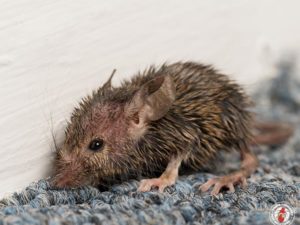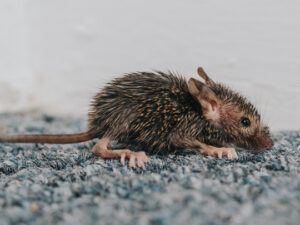

You hear it first. A faint scratching in the walls at 2:00 AM. Or perhaps you see it: a dark, fleeting shadow darting behind the refrigerator. The realization that you have a mouse in the house triggers a primal reaction in most of us. It feels like an invasion of privacy, a breach of our sanctuary. But to the house mouse (Mus musculus), your home is simply the ultimate survival jackpot—a warm, predator-free fortress stocked with endless food.
To defeat an enemy, you must understand them. Battling a rodent infestation isn’t just about setting traps; it is a strategic game of biology and psychology. The house mouse is an evolutionary marvel, designed by nature to survive, thrive, and multiply in almost any environment humans create. They are not merely pests; they are highly adapted biological machines.
Effective pest control requires moving beyond fear and looking at the science. By understanding the sensory capabilities, breeding cycles, and dietary needs of these tiny intruders, you can dismantle the environment that allows them to flourish. This guide dives deep into the biology of the house mouse and translates that knowledge into actionable, science-backed strategies to reclaim your home.
Meet Your Unwanted Roommate: Mus musculus
The house mouse is distinct from its outdoor cousins, like the deer mouse or field mouse. While those species might wander inside occasionally, the house mouse has evolved to live specifically alongside humans. This commensal relationship means they are dependent on us for survival, making them incredibly persistent.
Physical Characteristics
Adult house mice are deceptively small. Their bodies typically range from 2.5 to 3.5 inches long, with a tail of equal length adding to their total size. They weigh very little—usually between half an ounce to an ounce. This lightweight build allows them to be agile climbers and jumpers. They can jump up to a foot vertically, which is impressive relative to their size. Their fur ranges from light brown to gray or black, with lighter bellies.
Sensory Superpowers
Mice perceive the world differently than we do. Their vision is poor; they are colorblind and rely heavily on movement detection rather than sharp focus. Because they cannot see well, they tend to run along walls (a behavior called thigmotaxis) where their whiskers, or vibrissae, can guide them. These whiskers are highly sensitive tactile organs that help them navigate in complete darkness.
While their eyes fail them, their other senses compensate with extraordinary power. A mouse’s sense of smell is keen enough to detect food from significant distances and identify the pheromones of other mice. This is why a single scout mouse can lead an entire colony to a dropped cracker behind your sofa. Their hearing is also ultrasonic, allowing them to communicate with each other in high-frequency ranges that human ears cannot detect.
A Metabolism on Overdrive
A mouse is a furnace of energy. To maintain their body temperature and high activity levels, they must eat constantly. A single mouse eats about 15 to 20 times a day. While they only consume about 3 to 4 grams of food daily, their nibbling habit damages far more food than they actually ingest.
This rapid metabolism leads to the most visible sign of an infestation: droppings. One mouse can produce between 40 to 100 droppings per day. These pellets are not just unsightly; they contain pheromones that signal safety to other mice, essentially hanging a “Welcome” sign in your pantry.
The Reproductive Engine
If there is one biological trait that makes the house mouse a formidable opponent, it is their reproductive capacity. Their biology is tuned for speed.
The Mathematics of Infestation
A female mouse can become pregnant at just six to eight weeks old. Her gestation period is incredibly short—roughly 19 to 21 days. A typical litter contains 5 to 6 pups, though it can be as high as 12.
Here is where the math gets frightening: A female can mate again immediately after giving birth. Theoretically, a single pair of mice can produce dozens of offspring in a year. If those offspring also begin breeding within two months, the population grows exponentially. This is why ignoring a single mouse sighting is a critical error. What seems like a solitary visitor is often the vanguard of a burgeoning colony.
Nesting Instincts
To support this rapid breeding, mice require safe, warm nesting sites. They are experts at repurposing human materials. Shredded paper, fiberglass insulation, fabric, and cardboard are prime construction materials. Nests are usually located in dark, undisturbed areas close to a food source—think the back of a cabinet, inside a wall void, or beneath an appliance.
Behavior and Entry Mechanics
Understanding how mice get in is just as important as knowing why they want to be there. Their skeletons are remarkably flexible. A common rule of thumb in pest control is that if a mouse can fit its head through a hole, the rest of the body can follow.
The Dime Theory
An adult mouse can squeeze through an opening as small as a dime (approx. 1/4 inch). This ability is due to their lack of a fused collarbone and a skull that can navigate tight spaces. Any gap around utility pipes, vents, door frames, or foundation cracks is a potential highway into your home.
Nocturnal Navigators
Mice are nocturnal, doing the majority of their foraging between dusk and dawn. This behavior helps them avoid predation. If you are seeing mice during the day, it often indicates a very large population where competition for food has forced some individuals to hunt during off-hours.
Fortifying Your Home: Prevention Strategies
Knowing the biology of the mouse allows us to reverse-engineer their survival needs. To keep them out, you must disrupt their triangle of life: food, water, and shelter.
Seal the Perimeter
Exclusion is the most effective long-term solution. You need to physically block their entry.
- Steel Wool and Copper Mesh: Mice can chew through wood, plastic, and even soft concrete. However, they cannot chew through steel wool or copper mesh. Stuff these materials into small gaps around pipes or in corners, and seal them in place with expanding foam or caulk.
- Door Sweeps: A gap under the front or back door is an open invitation. Install heavy-duty brush or rubber sweeps on all exterior doors.
- Vent Protection: Ensure all attic, roof, and crawl space vents are covered with hardware cloth (wire mesh) rather than standard window screening, which mice can easily gnaw through.
Starve Them Out
Because of their high metabolism, mice cannot survive long without food.
- Airtight Containers: Cardboard boxes and thin plastic bags are no match for rodent teeth. Transfer cereals, grains, pet food, and baking ingredients into heavy plastic or glass containers with airtight seals.
- Pet Food Discipline: Leaving a bowl of dog or cat food out overnight is the equivalent of a buffet. Feed pets at specific times and pick up the bowls immediately after.
- Crumb Control: Deep clean the areas often missed—under the stove, behind the fridge, and inside toaster trays.
Eliminate Water and Clutter
While mice get much of their water from food, they still need moisture. Fix leaky pipes and dripping faucets. Furthermore, reduce clutter in basements and garages. Stacks of old newspapers or piles of laundry on the floor provide ideal cover and nesting material. By keeping floors clear, you remove their sense of security.
When Prevention Fails: Removal Tactics
Sometimes, despite best efforts, mice breach the perimeter. When active removal is necessary, biology should still guide your choices.
Trapping Strategy
Snap traps remain one of the most effective and humane methods if used correctly.
- Placement matters: Remember thigmotaxis (wall-hugging). Place traps perpendicular to the wall, with the trigger end facing the baseboard. This intercepts them as they run along their usual path.
- The Bait Debate: While cartoons suggest cheese is the ultimate bait, biology disagrees. Mice crave high-calorie, high-protein, and high-sugar foods. Peanut butter, hazelnut spread, or even a piece of bacon or chocolate are far more effective lures than cheese.
- Pre-baiting: Mice are neophobic, meaning they are afraid of new objects. Place unset traps with food on them for a few days. Let the mice grow comfortable feeding from the trap before you set the trigger.
A Note on Rodenticides
Poison baits can be effective but come with risks. Dying mice may retreat into walls, creating odor issues. There is also the risk of secondary poisoning to pets or wildlife that might eat a poisoned mouse. For residential issues, trapping is generally safer and allows you to confirm removal.
Frequently Asked Questions
Does peppermint oil actually repel mice?
The science is mixed. While mice have a sensitive sense of smell and dislike strong odors like peppermint, it is rarely a standalone solution. The scent must be incredibly strong and refreshed constantly to have any effect. Hunger usually overrides their dislike of the smell. It might work as a temporary deterrent, but it won’t solve an infestation.
How long do house mice live?
In the wild, life is tough, and a mouse rarely lives past 12 months due to predation and exposure. However, inside your climate-controlled, predator-free home, a mouse can live up to two or three years.
Why do I only hear them at night?
Mice are nocturnal instinctively to avoid predators. Their eyes are adapted for low light, and their whiskers help them navigate the dark. Hearing scratching at night is the classic sign of their waking cycle.
Do ultrasonic repellers work?
Most entomologists and pest control experts agree that ultrasonic devices have limited effectiveness. Mice are adaptable; they may be annoyed by the sound initially, but they quickly habituate to it, especially if food is present.
Can mice climb stairs?
Absolutely. Mice are excellent climbers and jumpers. They can climb stairs, rough vertical walls, and even navigate through wall voids to reach upper floors or attics.
Reclaiming Your Sanctuary
The presence of a house mouse is not a reflection of your cleanliness, but rather a testament to their biological adaptability. They are survivors looking for an easy life. By understanding their physical limitations, sensory reliance, and breeding speed, you can outsmart them.
The battle against Mus musculus is won through diligence. It requires sealing the dime-sized gaps, securing the food sources, and understanding that one mouse is never just one mouse. With a science-based approach, you can turn your home from a rodent paradise back into a human sanctuary.