Ants return to your kitchen because they follow pheromone trails left by worker ants, and spraying visible ants does nothing to eliminate the colony sending them. Long-term control requires cutting off food and moisture sources, sealing entry points, and — for persistent or carpenter ant infestations — targeting the colony directly with professional treatment.
A few ants on the counter might seem like a minor annoyance. Wipe them away, spray something from under the sink, and move on. But if you’ve done exactly that — only to find a fresh trail the next morning — you already know the real problem: ants don’t wander in by accident, and surface-level fixes rarely hold.
This post breaks down exactly why ant infestations happen, why they keep repeating even when you think you’ve dealt with them, and what actually works to stop them. Whether you’re dealing with a thin trail of sugar ants or a more serious carpenter ant problem, understanding the biology behind the invasion is the first step toward fixing it for good.
Why Are Ants Targeting Your Kitchen and Pantry?
What Are Ants Actually Looking for Indoors?
Ants enter homes for three reasons: food, water, and shelter. Your kitchen and pantry happen to offer all three in abundance.
Worker ants — the ones you see marching across your counter — are foragers. Their job is to scout for resources and bring them back to the colony. They’re remarkably efficient at it. A single forager can detect food residue invisible to the human eye, including grease film on stovetops, crumbs lodged under appliances, sticky residue around jar lids, and even pet food left out overnight.
Moisture is just as attractive as food. Dripping pipes under the sink, condensation around appliances, and standing water near dishwashers create ideal conditions. Some ant species, particularly odorous house ants and pavement ants, are drawn to damp environments as much as to food sources.
What Are the Most Common Entry Points Homeowners Overlook?
Ants don’t need much space to get inside. A gap of just 1–2 millimeters is enough for most common species. The entry points homeowners most frequently miss include:
- Gaps around plumbing pipes where they pass through exterior walls
- Cracks in the foundation at or below ground level
- Worn weatherstripping around doors and windows
- Gaps behind kitchen cabinets that are attached to exterior walls
- Utility conduit openings for cable, HVAC, or electrical lines
Ants don’t typically chew through solid walls — they exploit weaknesses that already exist. That means even a well-maintained home can be vulnerable if these entry points go unsealed.
Why Do Ants Keep Coming Back After You Spray?
How Do Pheromone Trails Work?
When a forager ant finds food, it doesn’t just eat and leave. On its way back to the colony, it deposits a chemical signal — a pheromone trail — that recruits other workers to follow the same path. The more ants that travel the trail and return successfully, the stronger the signal becomes.
This is why a small trickle of ants can turn into a steady stream within hours. The trail acts as a self-reinforcing recruitment system. Removing the food source weakens the signal over time, but the trail itself can persist on surfaces for days.
Why Does Killing Worker Ants Fail to Solve the Problem?
The ants you see represent a small fraction of the colony. Most ant colonies consist of thousands to hundreds of thousands of individuals — including a queen (or multiple queens) and a large population of workers, larvae, and eggs that never leave the nest. Killing foragers disrupts the trail temporarily but does not affect the reproductive capacity of the colony.
Spray-based contact insecticides are particularly limited for this reason. They kill ants on contact but don’t travel back to the nest. Within a few days, the colony sends new foragers, a fresh trail is established, and the cycle begins again. This is the core reason ant problems feel impossible to shake with over-the-counter products alone.
Myth vs. Reality: “A Clean Kitchen Should Be Enough”
This is one of the most common misconceptions homeowners have — and one of the most frustrating when it turns out to be wrong.
A clean kitchen significantly reduces your risk of an ant infestation, but it does not eliminate it. Ants can detect food residue that standard cleaning leaves behind. A thin film of cooking grease, a small amount of sugary liquid dried near a bottle cap, or crumbs lodged in a pantry shelf crack can all attract foragers even in kitchens that appear spotless.
Additionally, if a colony has already established a trail to your home, foragers will continue searching that route even when food isn’t immediately visible. They’re persistent, and the structure of your home — rather than its cleanliness alone — determines whether they can get inside.
Cleanliness is a necessary prevention step. But on its own, it’s rarely sufficient.
Prevention Steps That Actually Make a Difference
The following measures address the root causes of ant attraction and entry. Implementing them together significantly reduces the conditions that make your kitchen a target.
Food Storage
- Store all dry goods — flour, sugar, cereals, and grains — in airtight containers with secure lids
- Keep ripe fruit in the refrigerator rather than on the counter
- Clean jar lids and bottle tops after each use, particularly honey, syrup, and condiments
- Avoid leaving pet food in open bowls overnight
Moisture Control
- Fix leaking pipes and dripping faucets under and around the sink immediately
- Dry wet dish towels and sponges between uses
- Ensure appliances like dishwashers and refrigerators aren’t creating condensation or pooling water
- Use a dehumidifier in damp crawl spaces or basements adjacent to the kitchen
Sealing Entry Points
- Apply caulk around gaps where pipes pass through walls
- Replace worn door and window weatherstripping
- Seal foundation cracks with appropriate filler
- Install door sweeps on exterior-facing kitchen doors
General Habits
- Empty kitchen trash bins daily and keep outdoor bins sealed and away from the home’s exterior
- Wipe counters and stovetops after cooking, not just before meals
- Sweep or vacuum under appliances regularly — crumbs accumulate in places you rarely check
None of these steps is complicated. But implementing all of them simultaneously removes the combination of conditions that make your kitchen attractive in the first place.
When Should You Call a Professional — Especially for Carpenter Ants?
DIY prevention and over-the-counter bait products work reasonably well for small, early-stage infestations of common species like odorous house ants or pavement ants. If you’re seeing occasional ants and can identify an obvious food source, start with the prevention steps above and give bait stations two to three weeks to show results.
What Are the Signs That an Infestation Is Bigger Than It Looks?
Some situations call for professional intervention from the start:
- Trails appearing in multiple rooms, not just the kitchen
- Ants present year-round, including winter months when most species go dormant
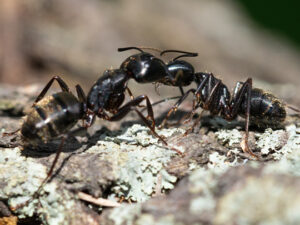
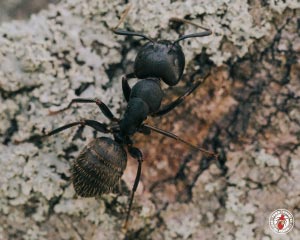
- Large, dark ants with segmented bodies — these may be carpenter ants, which behave very differently from household nuisance species
- Soft or hollow-sounding wood near where ants are active, which may indicate structural damage
- Repeated infestations that return each spring despite previous treatment
Carpenter ants are a particular concern. Unlike common ant species that forage for food inside and nest outdoors, carpenter ants can nest within the structure of your home — inside wall voids, wooden beams, and moisture-damaged wood. They don’t consume wood the way termites do, but the tunneling they create causes progressive structural damage over time. According to pest control industry data, carpenter ant damage often goes undetected for one to three years before homeowners notice visible signs.
What Does Professional Colony Treatment Involve?
Licensed pest professionals don’t simply treat the ants you can see. Effective colony treatment typically involves:
- Inspection to identify the species, locate nest sites, and map entry points
- Non-repellent insecticide application — products ants can’t detect, which they carry back into the colony and spread to other members
- Exterior perimeter treatment to intercept foragers before they enter the home
- Entry point sealing recommendations specific to your home’s construction
- Follow-up visits to confirm colony elimination and prevent re-entry
The distinction between repellent and non-repellent products matters significantly. Most over-the-counter sprays use repellent formulas that ants avoid — which can actually scatter a colony and make the problem harder to resolve. Professional-grade non-repellent treatments work slowly and deliberately, allowing the product to spread through the colony before it takes effect.
Stop the Cycle — Don’t Just Manage It
Ant infestations feel relentless because they are, by design, built to persist. A colony will keep sending foragers as long as it exists, and pheromone trails will keep guiding them to the same spots inside your home. Wiping down the counter and reaching for the spray can interrupts the trail — it doesn’t break the cycle.
The fixes that actually work target the root causes: removing what ants are looking for, blocking the routes they use to get inside, and — when needed — eliminating the colony at the source. For most homeowners, that combination of consistent prevention habits and, where necessary, professional colony treatment is what finally brings lasting relief.
Ants coming back no matter what you try? A licensed pest professional can treat the colony at the source — not just the trail. Book your free inspection today and get a clear picture of what’s driving the infestation.
Frequently Asked Questions
Why do ants keep coming back to my kitchen even after I clean it?
Ants return because they follow pheromone trails left by previous foragers, and these chemical signals can persist on surfaces for days. Cleaning removes visible food residue but doesn’t eliminate the trail or the colony producing the ants. Long-term control requires sealing entry points, removing moisture sources, and using slow-acting bait products that reach the colony — not just contact sprays that kill foragers on the spot.
What is the fastest way to get rid of ants in my kitchen?
The fastest approach combines two steps: placing slow-acting ant bait stations near active trails, and removing all accessible food and moisture sources simultaneously. Avoid using contact sprays alongside bait — they repel ants away from the bait stations and reduce effectiveness. Results typically appear within one to two weeks for common species.
How do I know if I have carpenter ants vs. regular ants?
Carpenter ants are noticeably larger than most household ant species — typically 6–12 millimeters in length — and are dark brown or black with a clearly segmented abdomen. They are most active at night and are often seen near moisture-damaged wood, window frames, or structural beams. If you see large ants inside your home during winter, treat it as a priority concern and consult a pest professional.
Can ants enter a home through tiny cracks?
Yes. Most common ant species can move through openings as small as 1–2 millimeters. Standard entry points include gaps around plumbing pipes, cracks in foundations, worn door weatherstripping, and gaps behind kitchen cabinets that share an exterior wall. Sealing these with caulk or weatherstripping is a necessary step in long-term prevention.
Are DIY ant treatments effective, or do I need a professional?
DIY treatments — particularly slow-acting gel baits and granular products — can be effective for small, localized infestations of common species caught early. They become less reliable when the infestation spans multiple rooms, involves carpenter ants, returns year after year, or when the nest cannot be located. In those cases, professional treatment targeting the colony directly produces more consistent and lasting results.
How long does professional ant treatment take to work?
Most professional ant treatments show measurable results within one to two weeks, with full colony elimination typically occurring within four to six weeks depending on species and colony size. Some treatments require a follow-up visit to confirm effectiveness. Non-repellent professional products work gradually by design — allowing ants to carry the treatment back into the nest before the colony is affected.