
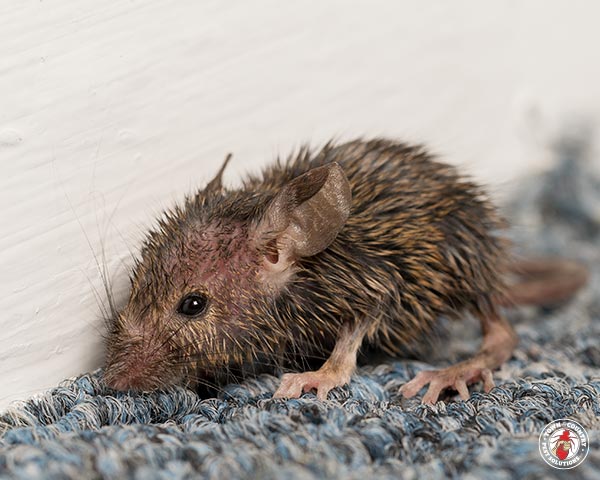
You hear it late at night—a faint scratching sound coming from somewhere inside the wall. You tell yourself it’s the house settling. Maybe it’s the pipes. But deep down, you already suspect the truth.
Mice are expert hiders. They squeeze through gaps as small as a dime, nest in insulation, and travel through wall cavities without ever showing themselves in the open. By the time you spot one running across your kitchen floor, there’s a good chance a full colony has already taken up residence behind your drywall.
The good news? Mice leave clues. Knowing what to look for—and acting quickly—can mean the difference between a minor inconvenience and a full-blown infestation. Here are seven telltale signs that mice are living inside your walls.
1. Scratching and Scurrying Sounds
The most obvious sign is also the one people dismiss most often. If you hear light scratching, rustling, or scurrying sounds—especially at night—pay attention to where they’re coming from. Mice are nocturnal, so activity tends to peak after dark.
The sounds are usually concentrated in specific areas: behind baseboards, above ceilings, or inside wall cavities near the kitchen or bathroom. Scratching sounds often indicate a mouse gnawing on wood or insulation. Rapid, light pattering typically means one is on the move.
If the sounds seem to travel in a consistent path, that’s a strong indicator. Mice use the same routes repeatedly, so you may notice the noise following a similar pattern each night.
2. Droppings Along Baseboards and in Corners
Mouse droppings are small—roughly the size of a grain of rice—and dark brown or black in color. They’re one of the most reliable indicators of an active infestation.
Inside walls, droppings often accumulate near entry points: small holes, gaps around pipes, or spaces where the wall meets the floor. You might not see them inside the wall directly, but check the surrounding areas. Droppings near electrical outlets, behind appliances, or in kitchen cabinets suggest mice are traveling through that section of the wall.
Fresh droppings are moist and dark. Older ones become dry and crumble easily. If you’re finding both, the infestation is likely ongoing.
3. Gnaw Marks on Walls and Woodwork
Mice have front teeth that never stop growing, which means they gnaw constantly to keep them filed down. Wood, drywall, plastic, and even soft metals are all fair targets.
Look for small, irregular bite marks along baseboards, door frames, and the corners where walls meet floors. Gnaw marks on drywall near the floor can indicate a mouse trying to create or enlarge an entry point. You might also notice rough, frayed edges around small holes in the wall—another telltale sign.
Fresh gnaw marks tend to be lighter in color. As they age, they darken and become smoother.
4. Grease Marks and Smear Trails
Mice have oily fur that leaves faint smear marks along the surfaces they repeatedly travel. These greasy streaks are most visible on light-colored walls, baseboards, and pipes.
The marks are easy to overlook at first glance, but once you know what you’re looking for, they’re fairly distinctive—a thin, grayish smudge running along the base of a wall or around a small opening. Since mice follow the same routes every night, these trails tend to be consistent and directional.
If you spot a smear trail leading toward a small gap or hole in the wall, there’s a high probability that’s an active entry point.
5. A Persistent, Stale Odor
Mice produce a strong, musky ammonia-like smell from their urine. In an enclosed space like a wall cavity, that odor builds up quickly and can permeate through drywall into the room.
If you notice a stale, unpleasant smell that doesn’t seem to have an obvious source—and that gets stronger near a particular wall or corner—that’s worth investigating. The smell is often most noticeable in rooms that are kept closed or have poor ventilation.
A particularly sharp or intense odor in one spot can sometimes indicate a mouse has died inside the wall, which introduces a separate but equally urgent problem.
6. Nesting Materials in Unusual Places
Mice build nests from whatever soft material they can find: shredded paper, fabric, insulation, and plant fibers are all common choices. If you discover small piles of torn materials in unusual places—tucked behind appliances, in the back of cabinets, or near pipes that pass through walls—you may be looking at nesting activity.
While the nest itself is usually located inside the wall or in a secluded cavity, mice carry materials back to it from nearby areas. Finding a trail of shredded material leading toward a wall gap or baseboard crack is a strong signal.
Keep an eye on areas near warm spots too. Mice prefer to nest close to heat sources, so walls adjacent to water heaters, furnaces, or refrigerators are popular locations.
7. Pets Acting Strangely Near Walls
Dogs and cats can detect mice long before humans do. If your pet starts pawing at a wall, staring intently at a baseboard, or sniffing obsessively in a particular area, take it seriously. Animals respond to the sounds and scents that remain completely below human perception.
This behavioral change is especially significant if it’s new, consistent, and focused on a specific section of the wall. Pets rarely fixate on a blank wall for no reason. Their instincts are often more reliable than any trap or inspection tool.
What to Do If You Notice These Signs
Spotting one or two of these signs doesn’t always confirm an infestation—but finding multiple is a strong indicator that mice are active inside your walls. Acting fast matters. Mice reproduce rapidly; a pair can produce dozens of offspring within a few months.
Start with these steps:
- Seal entry points — Inspect the exterior of your home for gaps, cracks, and holes. Pay special attention to areas where pipes and cables enter the building. Steel wool and caulk are effective short-term solutions; for a permanent fix, use wire mesh or metal flashing.
- Set traps near activity areas — Snap traps placed along baseboards or near suspected entry points are among the most effective options. Avoid placing them in open areas; mice stay close to walls.
- Remove food and nesting materials — Store food in sealed containers, keep clutter to a minimum, and reduce anything that could serve as nesting material.
- Call a pest control professional — If the infestation appears significant, or if you’re finding signs in multiple rooms, professional extermination is the most reliable path forward.
Don’t Wait for the Problem to Get Worse
A single mouse inside a wall can become ten within a matter of weeks. The longer an infestation goes undetected, the more damage accumulates—chewed wiring, compromised insulation, and contaminated surfaces all become more severe over time.
The signs outlined above give you a practical framework for detecting the problem early. Regular checks in vulnerable areas—kitchens, basements, attics, and utility rooms—go a long way toward keeping your home protected.
If something feels off, trust your instincts. Chances are, something is.