Few things trigger a visceral reaction quite like turning on the kitchen light and seeing a dark shape scuttle across the counter. It evokes a feeling of violation and uncleanliness that can keep you up at night. While our immediate instinct is often to grab the nearest can of insecticide and spray until the can is empty, this approach rarely solves the underlying problem.
To successfully reclaim your home, you need to think like a general preparing for battle. You must understand your enemy. Not all cockroaches are the same; they have different behaviors, different habitats, and different weaknesses. A strategy that works for one species might be completely ineffective against another.
This guide provides a comprehensive look at the most common invaders you are likely to encounter. We will break down how to identify them, where they hide, and, most importantly, the specific tactics required to kick them out for good.
Why Identification Is Your First Line of Defense
Many homeowners make the mistake of assuming a roach is just a roach. This misconception leads to wasted money on ineffective traps and sprays.
Different species prefer different environments. Some crave moisture and are likely coming from your drains or basement. Others thrive on heat and dry conditions, preferring to nest behind your refrigerator motor or inside your electronics. If you treat your baseboards for a species that lives inside your kitchen cabinets, you will never stop the breeding cycle.
Correctly identifying the species tells you two critical things: where the nest is likely located and what food sources they are exploiting. Once you know these factors, you can target your treatment for maximum impact.
The German Cockroach (Blattella germanica)
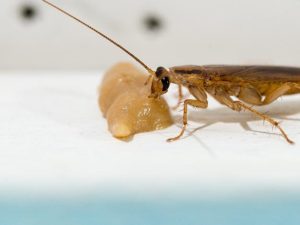
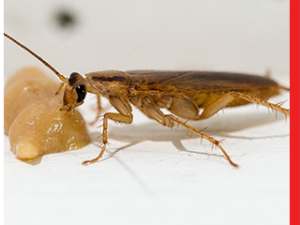
If you are dealing with an infestation inside your living quarters, particularly in the kitchen or bathroom, this is the most likely culprit. The German cockroach is the most common and arguably the most difficult species to control.
Identification
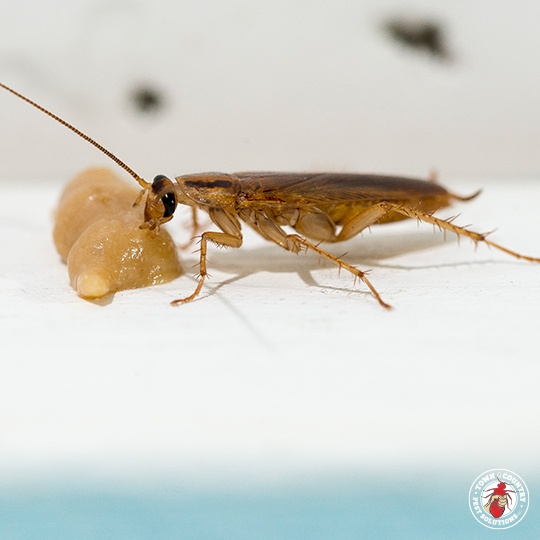
These are smaller roaches, typically ranging from 1/2 to 5/8 of an inch long. They are light brown or tan and have two distinct dark, parallel stripes running down the shield behind their head (the pronotum). They have wings but rarely fly, preferring to run.
Habits and Habitat
German cockroaches are domestic pests, meaning they live exclusively indoors near humans. They rely on us for warmth, food, and water. You will almost always find them in kitchens and bathrooms because they require frequent access to moisture.
They are prolific breeders. A single female can produce an egg capsule (ootheca) containing 30 to 40 eggs, which she carries until just before they hatch. This high reproductive rate allows populations to explode in a matter of weeks.
How to Fight Them
Because they breed so quickly and hide in tiny crevices, sprays often fail. The most effective strategy involves baiting and growth regulators.
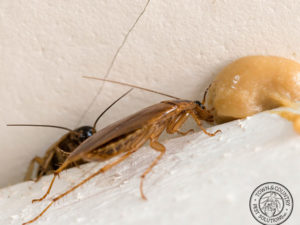
- Gel Baits: Use high-quality cockroach gel baits. Place small dots (the size of a pea) in cracks and crevices around cabinets, hinges, and appliances. The roaches eat the bait, return to the nest, and die. Other roaches then consume the carcass and are poisoned as well (a domino effect).
- Insect Growth Regulators (IGRs): These products don’t kill adults immediately but prevent nymphs from maturing into breeding adults. This breaks the life cycle.
- Sanitation: You must starve them out. Eliminate all crumb sources, grease buildup behind the stove, and standing water.
The American Cockroach (Periplaneta americana)
Often referred to as “palmetto bugs” or “water bugs” in the southern United States, these are the heavyweights of the roach world.
Identification
American cockroaches are large, reaching sizes of 1.5 to 2 inches or more. They are reddish-brown with a yellowish figure-eight pattern on the back of their head. Both males and females have wings and can fly, though they usually glide.
Habits and Habitat
Unlike the German cockroach, the American cockroach prefers to live outdoors or in semi-outdoor environments. They thrive in sewers, storm drains, and steam tunnels. When they enter homes, they usually inhabit basements, crawl spaces, and first-floor bathrooms. They prefer damp, dark, and warm environments.
How to Fight Them
Controlling American roaches is largely about “exclusion”—keeping them out.
- Seal Entry Points: Check weather stripping around doors and windows. Seal gaps around plumbing pipes where they enter the walls or floors.
- Drain Maintenance: Since they often navigate through pipes, ensure your P-traps (the U-shaped pipe under sinks) are filled with water. If a drain is rarely used, the water evaporates, creating a highway for roaches.
- Perimeter Treatments: Applying a granular bait or residual insecticide barrier around the exterior foundation of your home can stop them before they get inside.
The Oriental Cockroach (Blatta orientalis)
These pests are notoriously filthy, often associated with decaying organic matter and sewage.
Identification
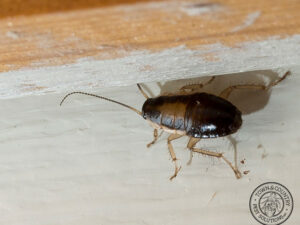
Oriental cockroaches are dark brown to shiny black and measure about 1 inch in length. They are sometimes called “water bugs” because of their affinity for damp places. Males have wings that cover only part of their abdomen, while females are effectively wingless. Neither can fly.
Habits and Habitat
These roaches love cool, damp areas. Outdoors, they live under debris, leaves, and stones. Indoors, they gravitate toward basements, cellars, and washing machines. They are sluggish compared to other species and emit a strong, unpleasant “roachy” odor.
How to Fight Them
Moisture control is the primary weapon against Oriental cockroaches.
- Dehumidify: Run dehumidifiers in damp basements and crawl spaces to make the environment inhospitable.
- Remove Debris: Clear wet leaves, mulch, and firewood away from the foundation of your house.
- Ventilation: Ensure crawl spaces are properly ventilated to prevent moisture buildup.
The Brown-Banded Cockroach (Supella longipalpa)
This species is often mistaken for the German cockroach, but treating them like German roaches will result in failure because they live in completely different areas of the home.
Identification
They are similar in size to German roaches (about 1/2 inch) but lack the two dark stripes behind the head. Instead, they have two light transverse bands across their dark brown bodies and wings.
Habits and Habitat
Brown-banded cockroaches prefer drier, warmer conditions than their German cousins. They do not need to be near the kitchen sink. You are more likely to find them in bedrooms, living rooms, and offices. They often hide in high places—upper cabinets, behind picture frames, inside clocks, and within warm electronics like televisions or routers.
How to Fight Them
Because they scatter throughout the house rather than clustering in the kitchen, you must cast a wider net.
- Target High Areas: When applying bait, look up. Place bait behind wall hangings, on top of cabinets, and in closet shelves.
- Vacuuming: Regularly vacuuming furniture and drapery can help remove egg cases that are glued to protected surfaces.
- Broad Baiting: You cannot limit treatment to the kitchen and bathroom. You must inspect and treat living areas and bedrooms.
Integrated Pest Management: A Holistic Strategy
Regardless of the species, the most successful long-term solution is Integrated Pest Management (IPM). This approach combines sanitation, habitat modification, and chemical controls.
Sanitation
Cockroaches are scavengers. If there is no food, they cannot survive.
- Store food in airtight glass or plastic containers.
- Do not leave pet food out overnight.
- Clean under heavy appliances like refrigerators and stoves where grease accumulates.
- Take the garbage out nightly and ensure the bin has a tight-fitting lid.
Exclusion
Deny them entry.
- Caulk cracks and crevices in baseboards and cabinets.
- Install door sweeps on exterior doors.
- Screen over attic vents and chimney openings.
Chemical Control
Use chemicals judiciously. Avoid “bug bombs” or total release foggers. These products often fail to reach the cracks where roaches hide and simply coat your countertops in pesticide. Stick to targeted gel baits, dusts (like boric acid or diatomaceous earth) for wall voids, and IGRs.
Frequently Asked Questions
Are cockroaches dangerous to my health?
Yes. While they do not sting, cockroaches are significant vectors for disease. They crawl through sewage and decaying matter, picking up bacteria like Salmonella, E. coli, and Staphylococcus, which they transfer to food surfaces. Furthermore, their droppings, shedding skins, and saliva contain potent allergens that can trigger asthma attacks, particularly in children.
If I see one roach, does it mean I have an infestation?
Usually, yes. Cockroaches are nocturnal and secretive. If you see one during the day, it likely means the hiding spots are overcrowded, forcing them out into the open. For every one you see, there may be dozens or hundreds hiding in the walls.
Do ultrasonic pest repellers work on roaches?
Scientific studies generally show that ultrasonic devices have little to no effect on cockroaches. Roaches may be startled by the sound initially but quickly habituate to it. They are not a reliable method of control.
Can I get rid of roaches naturally?
For small infestations, natural desiccants like food-grade Diatomaceous Earth (DE) can be effective. When roaches walk through the powder, it cuts their exoskeleton, causing them to dehydrate and die. Boric acid is another option, acting as a stomach poison. However, for severe infestations, specifically with German cockroaches, professional-grade baits are usually required.
Reclaiming Your Home
Discovering cockroaches in your home is stressful, but it is a solvable problem. Success rarely happens overnight; it requires persistence and a multi-faceted approach. By identifying the specific species you are up against and removing their access to food and shelter, you can break the breeding cycle.
Start by sealing the cracks, drying out the damp spots, and cleaning up the crumbs. If the infestation persists despite your best efforts, do not hesitate to contact a pest control professional. They have access to stronger growth regulators and specialized equipment that can turn the tide of the battle. Your home is your sanctuary—don’t let the roaches take it from you.